


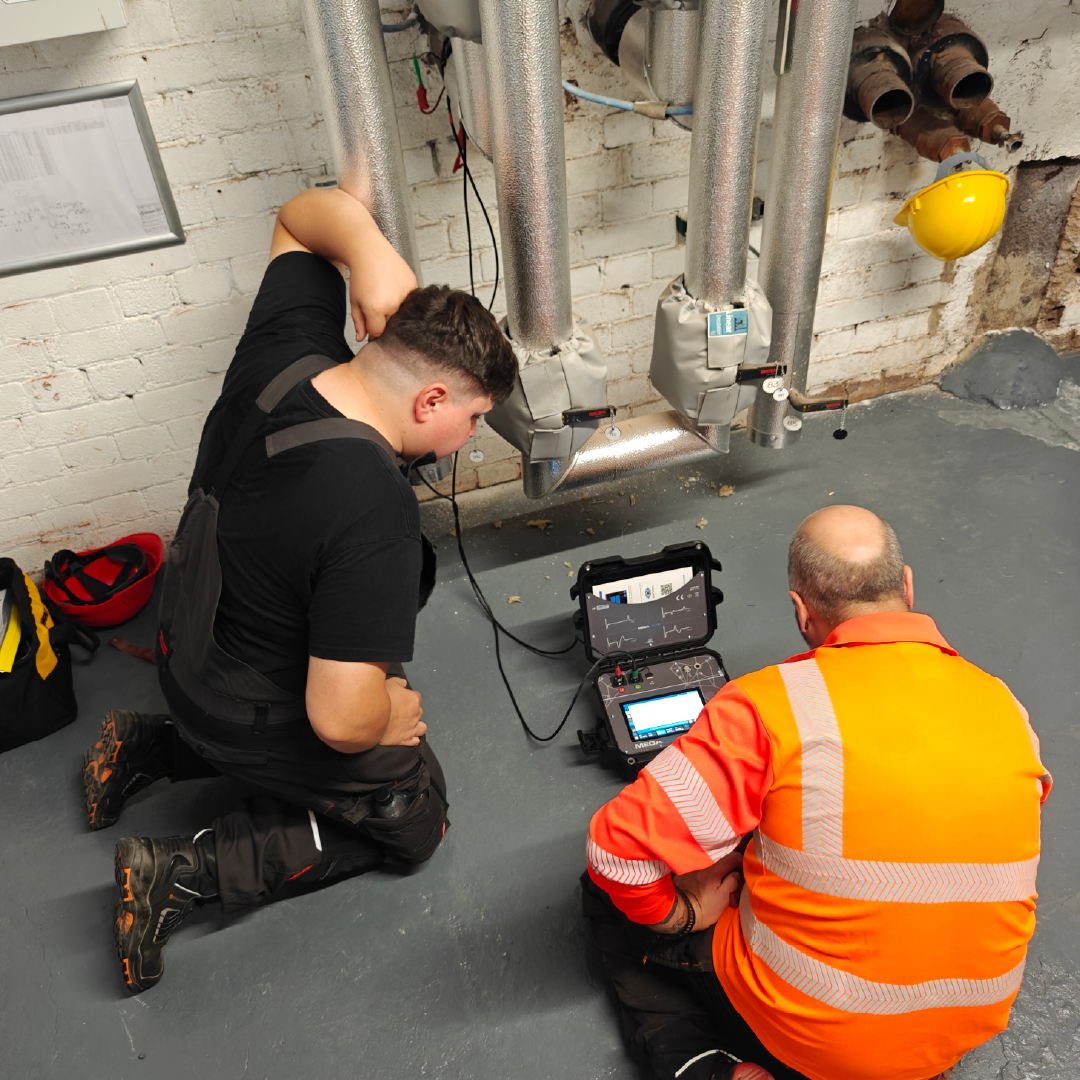
It often surprises people to learn that those two fine copper conductors running through the insulation of pre-insulated heating pipes are not there by accident. They form the core of what’s known as the Nordic two-wire system a clever and well-proven method for monitoring for moisture inside the insulation layer of district heating pipe systems.
Pre-insulated district heating pipes are designed to operate with completely dry polyurethane (PUR) insulation surrounding the steel carrier pipe. The integrity of this insulation is critical, not only for thermal efficiency, but also for protecting the steel pipe from corrosion.
If moisture enters the insulation layer, it almost always indicates a breach in the outer HDPE casing, a poorly sealed joint, or accidental mechanical damage. Once water reaches the steel media pipe, it creates an electrolytic environment; essentially a situation where moisture enables electrical reactions that accelerate corrosion, especially at welds and heat-affected zones. Left undetected, this corrosion can progress unnoticed beneath the insulation until it results in thinning of the steel wall, leaks, or even catastrophic pipe failure.
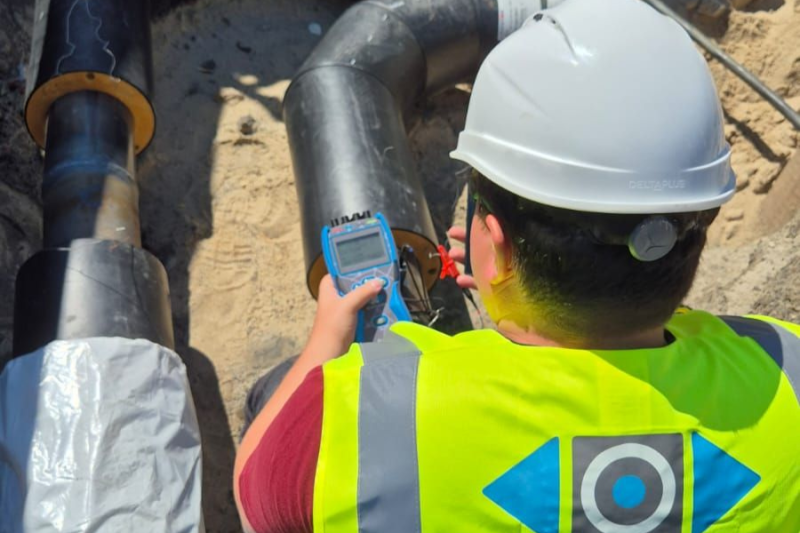
This is why leak detection systems are built into modern pre-insulated pipe networks. They act as continuous early-warning systems, alerting operators to moisture long before it becomes visible at the surface and long before any pressure-bearing part of the pipe is compromised. Detecting the first signs of insulation moisture allows targeted intervention, repairing the casing or joints before the steel pipe begins to corrode.
When installed correctly, the two wires in a Nordic system are joined at each joint to form one continuous wiring loop running the full length of the pipe network. By measuring how the insulation reacts when an electric field is applied (its dielectric behaviour), it’s possible to detect defects when water begins to infiltrate the insulation, long before it becomes a major leak.
This technique has been in use for decades across Northern Europe and is standardised under European norms such as EN 14419. It’s reliable, relatively simple, and compatible with most modern alarm and monitoring units.
The importance of proper earthing
No leak detection system can function properly without a solid electrical reference point. In the Nordic system, that reference is the steel carrier pipe, which must be correctly earthed (or grounded).
Earthing gives the system a clear electrical “zero.” Without it, the signal floats – measurements wander, false readings appear, and genuine leaks can be missed. In practice, a grounding lug is welded to the steel pipe and connected to the monitoring cabinet with an appropriate conductor (often 1.5 mm²).
During commissioning, technicians check three essential parameters:
- Insulation resistance between the wire pair and the steel pipe—an indicator of whether the insulation remains dry and intact.
- Loop resistance of the copper conductors themselves—to confirm continuity and detect any poor joints.
- Galvanic voltage between two dissimilar metals – to differentiate between simple resistance changes and actual water ingress that could lead to corrosion.
Those values are recorded as baseline references for later comparison. Over time, gradual changes can signal early moisture ingress or damage.
How impulse monitoring detects moisture
The Nordic two-wire system works by sending small, carefully timed electrical pulses – sometimes called impulse signals – through the wire loop. Under dry conditions, these pulses travel cleanly around the circuit and return without distortion.
If water enters the insulation, even in small amounts, it alters the dielectric properties of the foam. The pulse is partially absorbed or diverted toward the steel pipe, creating a measurable change. This alters both resistance (the simple opposition to DC current flow) and impedance (the more complex opposition to flow that also depends on inductance and capacitance). These changes distort the returning pulse, which the monitoring unit interprets as a fault condition.
It’s a simple principle, yet extremely sensitive. The result is a continuous, non-intrusive way to monitor the health of an underground pipeline; often detecting issues long before they become visible at the surface.
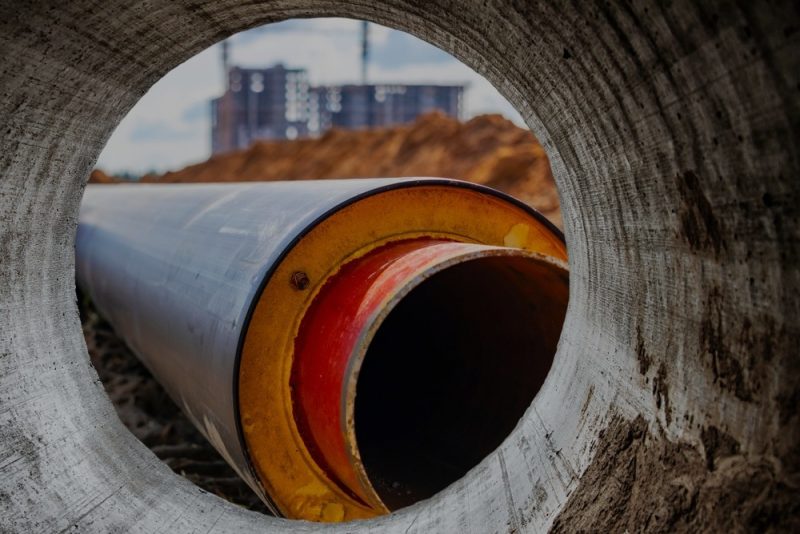
Locating the leak with Time Domain Reflectometry
Once an alarm sounds, the next question is obvious: Where exactly is the problem?
That’s where Time Domain Reflectometry (TDR) comes in. A TDR device sends a high frequency impulse down the monitoring wires and records how long it takes for reflections to return from any point where the sensor wire’s impedance changes, for instance, a damp section, a short circuit, or a wire break.
Because the signal’s speed in the cable is known, the system can calculate the distance to the fault. In effect, it’s a kind of electrical “radar” for underground pipes. The resulting trace (peaks and dips on a graph) gives technicians a clear indication of where the problem lies. A good operator can tell the difference between moisture, a damaged splice, or a simple open circuit just by the shape of that trace.
How RATMON fits into the picture
RATMON systems are designed to work directly with Nordic two-wire loops (as well as Brandes-type resistance systems and RATMON’s own MSC-1 insulated cable). The monitoring units continually analyse the loop, classify any faults, eg. a leak, short circuit, or break in the wire and use integrated TDR technology to pinpoint the location of the issue along the sensor wire.
Some RATMON products also support remote supervision, automatically forwarding data and alarms to cloud dashboards so operators can see the network’s status in real time.
For PEX-based systems – where condensation can trigger false readings – the MSC-1 fully insulated monitoring cable provides the same functionality while avoiding unwanted alarms.
Installation and maintenance essentials
A few best practices make all the difference between a reliable system and one that gives headaches:
- Take care at joints. Faulty wire splices are among the most common causes of false alarms. Use proper connectors and insulation.
- Record baseline measurements. Insulation and loop resistance readings, plus a clean TDR trace, serve as invaluable reference data.
- Ensure proper earthing. A poor ground connection is the single biggest cause of inaccurate or unstable readings.
- Monitor trends, not just alarms. A slow decline in insulation resistance may indicate early-stage moisture ingress well before an alarm threshold is reached.
When installed and maintained correctly, readings typically stay in the mega-ohm range to indicate a dry and healthy cable. A sudden or steady drop to a low ohm reading is an unmistakable sign that something around the sensor wires is changing and that’s when to act.
In summary
The Nordic two-wire system is, in essence, a finely tuned sensing network hidden inside every pre-insulated pipe. It provides early warning of leaks, protects valuable infrastructure, and supports efficient maintenance.
Combined with RATMON’s monitoring equipment and TDR-based fault location, it becomes a comprehensive diagnostic tool – one that doesn’t just say there’s a problem but shows you exactly where to look.
Quiet, reliable, and, when properly earthed and commissioned, remarkably effective at keeping networks dry, safe, and efficient for decades.
Recent News
27 February 2026
RISO – The Unsung Early-Warning Hero of RATMON Leak Monitoring
4 February 2026
Time Domain Reflectometry (TDR) – A Down-to-Earth Guide for RATMON Leak Detection
3 February 2026
Protecting Critical Infrastructure with RATMON’s Leak Detection Solutions for Data Centres and District Heating
7 November 2025
Reviving Alarm Systems in Legacy Buried Heat Networks